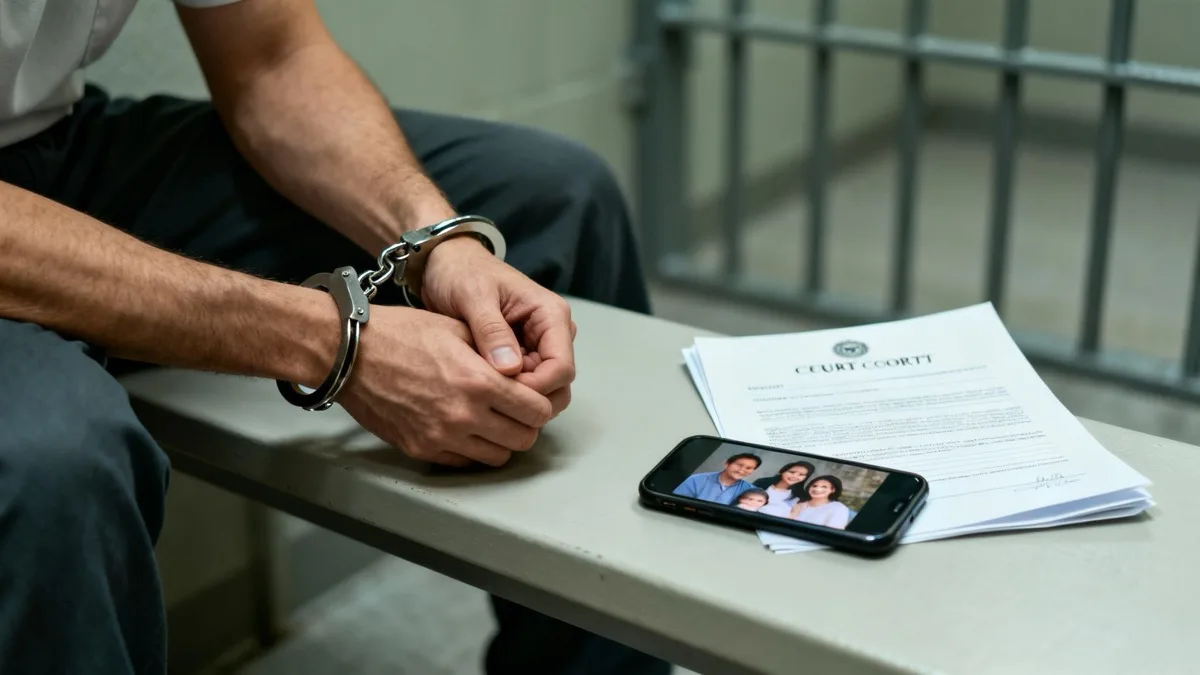
Ontario’s new cash bail rules are on hold. On August 31, 2026, Justice William Chalmers of the Ontario Superior Court of Justice granted an injunction suspending the cash deposit requirements created under the province’s Keeping Criminals Behind Bars Act, roughly two weeks after they took effect. Those rules would have required a person granted bail to actually produce the money within two days of release. The Canadian Civil Liberties Association and the Criminal Lawyers’ Association brought the challenge, arguing the province cannot override the federal bail scheme, which has treated cash deposits as a last resort for about fifty years, and that requiring cash makes release turn on wealth. Justice Chalmers has not yet decided the merits, and the province has said it will appeal. Until that is resolved, bail in Ontario runs on the pledge system it always has: a surety promises an amount and forfeits it only on a breach, rather than paying up front. The injunction does not touch the federal changes described below, which remain in force.
A bail hearing is the first major decision point after arrest. What happens in that room shapes your conditions, your ability to work, and your entire defence.
The Right to a Bail Hearing Within 24 Hours
Under section 503 of the Criminal Code, a person who has been arrested and not released by police must be brought before a justice of the peace within 24 hours, or as soon as possible if no justice is available. In practice, bail hearings in Toronto and the GTA often happen the next morning after an overnight arrest.
If you have been arrested on a Friday night, you may wait in custody until Monday. This is one of the many reasons why retaining a lawyer immediately after arrest matters. See my guide on what to do if you have just been arrested for the steps to take while you are still in custody. I can appear at bail hearings on short notice and work to get you out as quickly as the system permits.
How a Bail Hearing Works
A bail hearing, formally called a show cause hearing, is a relatively informal proceeding compared to a trial. The Crown goes first and presents evidence about the alleged offence, your criminal record if any, any prior failures to appear in court, and any other factors relevant to the grounds for detention. This evidence is typically given by a police officer reading from notes rather than through formal testimony.
The defence then has the opportunity to respond, call a surety, and make submissions. A surety is a person, typically a family member or close friend, who agrees to be responsible for ensuring you comply with your bail conditions and who may pledge money as security. The surety will be questioned about their knowledge of the charges, their relationship with you, and their ability to supervise you.
The justice of the peace then decides whether to release you, on what conditions, and whether any surety is required.
The Three Grounds for Detention
Before the three grounds are even reached, there is a governing principle, though its reach has just narrowed. In R. v. Antic the Supreme Court confirmed the "ladder principle": release on an undertaking without conditions is the default, and a justice may only move up to a more restrictive form of release, and ultimately to a surety or detention, if the Crown shows why each less onerous option is inadequate.
The Bail and Sentencing Reform Act (Bill C-14), in force since July 15, 2026, changed this significantly. The requirement to consider the least restrictive form of release no longer applies where the accused is subject to a reverse onus, and the Act clarifies that the principle of restraint does not mandate release. It also expanded the reverse onus categories considerably, adding violent and organized auto theft, break and enter of a home, trafficking in persons, human smuggling, assault or sexual assault involving choking or strangulation, extortion involving violence, serious violent offences with two or more prior similar convictions, and it extended the lookback for violent weapons offences from five years to ten. A further reverse onus now applies where the Crown seeks to revoke bail after a finding of guilt but before sentencing.
The practical consequence for anyone facing one of those charges is that a bail plan can no longer be thin. Where the onus is reversed you must clearly demonstrate that the plan addresses the specific risks, and the court will scrutinise it. The Act also restricts who may act as a surety: a person convicted of a serious offence within the previous ten years is generally excluded unless there is no alternative. Identifying a suitable surety early now matters more than it used to.
Where the onus remains on the Crown, conditions must still be reasonable, necessary, and connected to the risk they address, and conditions imposed out of habit rather than necessity remain worth challenging.
The Crown can seek detention on three grounds. The primary ground is that detention is necessary to ensure you attend court. This is the most common argument for accused persons with prior failures to appear or no fixed address.
The secondary ground is that detention is necessary for the protection or safety of the public, including any victim or witness. This ground applies most often in domestic violence and assault cases, or where the alleged offence involved violence or weapons.
The tertiary ground is that detention is necessary to maintain confidence in the administration of justice. This is typically reserved for the most serious charges, such as murder, or cases where the alleged conduct is particularly egregious.
Reversed Onus: When You Have to Prove You Should Be Released
In most bail hearings, the Crown bears the onus of showing cause why you should be detained. But for certain categories of offence, that onus is reversed: you must show cause why your detention is not justified.
Reversed onus situations include being charged with an offence while already on bail, certain serious drug offences, allegations involving firearms, and charges under the Criminal Code that carry specific reverse onus provisions. When the onus is reversed, the hearing becomes significantly harder, and the quality of your surety and your plan of release become critical.
Bail Conditions
If you are released, the justice will impose conditions. Common conditions include keeping the peace and being of good behaviour, appearing in court as required, reporting to a bail supervisor, staying away from specific persons or locations, surrendering your passport, abstaining from alcohol or drugs, having a curfew, and having a surety.
Conditions in domestic cases almost always include a no-contact order and a prohibition on attending the family home. In cases involving allegations of fraud or breach of trust, conditions may restrict access to finances or prohibit certain business activities.
Breaching any bail condition is a separate criminal offence under section 145 of the Criminal Code. A bail breach can result in revocation of your release and additional charges that complicate your original matter significantly.
What Happens If You Are Detained
If the justice orders you detained, you can apply to the Superior Court of Justice for a bail review under section 520 of the Criminal Code. A bail review is not an appeal in the traditional sense. You must show that the justice of the peace made an error in law or that there has been a material change in circumstances since the original hearing. In some cases, prolonged pre-trial detention also strengthens arguments for Crown withdrawal or a stay of proceedings down the road.
A bail review requires careful preparation, and the fresh evidence or new argument you present must be compelling. I have appeared on bail reviews across Ontario and understand what it takes to succeed on them.
Getting a Lawyer Before Your Bail Hearing
The single most important thing you can do before a bail hearing is speak to a lawyer. Calls about a fresh arrest reach me rather than an answering service, and I can appear at bail hearings in Toronto, Brampton, Newmarket, Oshawa, and across the GTA. The earlier I am involved, the more time I have to prepare your surety, understand the allegations, and build a release plan that addresses the Crown's concerns.
Call me at 647-547-6734 the moment you are able to after an arrest. Consultations are free and confidential.