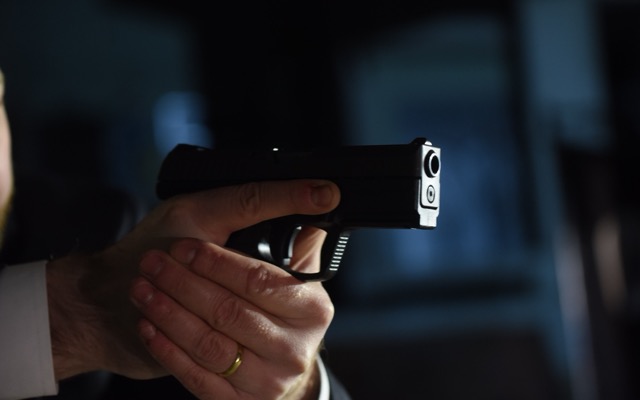
Weapons and firearms charges are aggressively prosecuted in Ontario. Many cases - forgotten guns, unlicensed firearms, an unlawful search - are more defensible than people realize.
The Most Common Weapons and Firearms Charges
The Criminal Code creates a broad range of weapons-related offences. The most frequently charged include possession of a firearm without a valid licence or registration under section 91, careless use or storage of a firearm under section 86, possession of a prohibited or restricted firearm under section 95, possession of a firearm while prohibited under section 117.01, carrying a concealed weapon under section 90, and using a firearm in the commission of an indictable offence under section 85.
Weapons offences extend beyond firearms to include prohibited weapons such as switchblades, butterfly knives, and brass knuckles, as well as any object used or carried for the purpose of harming someone. In many assault prosecutions, a charge of possession of a weapon for a dangerous purpose under section 88 is laid alongside the assault charge.
Prohibited vs. Restricted vs. Non-Restricted Firearms
Canadian firearms law classifies every firearm into one of three categories, and that classification determines what licences, registrations, and storage requirements apply. Non-restricted firearms are the most common, typically long guns used for hunting or sport. Restricted firearms include most handguns and certain semi-automatic rifles. Prohibited firearms are those banned from civilian possession, including certain fully automatic weapons and any handgun with a barrel of 105mm or less.
Possession of a restricted or prohibited firearm without the proper authorization is an indictable offence. The classification of the firearm is not just a regulatory detail. It determines the charge, the available defences, and often the sentencing range.
Mandatory Minimums and the Impact of R. v. Nur
Firearms offences historically carried some of the harshest mandatory minimum sentences in the Criminal Code. The Supreme Court of Canada's 2015 decision in R. v. Nur struck down several of those mandatory minimums as unconstitutional under section 12 of the Charter, which prohibits cruel and unusual punishment. However, mandatory minimums still apply to a number of serious firearms offences, including robbery with a firearm and using a firearm in the commission of an offence.
Even where mandatory minimums have been struck down, prosecutors typically seek significant custodial sentences for firearms offences. Judges in Toronto and across Ontario treat unlicensed or prohibited firearms possession seriously, particularly where the firearm is loaded, where it is found in a public place, or where there is any suggestion of gang involvement.
Charter Defences in Firearms Cases
A significant proportion of firearms charges in Ontario arise from traffic stops, investigative detentions, or searches of homes or vehicles. These are exactly the scenarios where Charter challenges under section 8 (unreasonable search and seizure) and section 9 (arbitrary detention) are most likely to succeed.
If police did not have lawful authority to stop you, detain you, or search your vehicle or home, any evidence they discovered may be excluded under section 24(2) of the Charter. In a firearms case, the firearm is often the only evidence. If it is excluded, the Crown has no case.
I have argued Charter motions in firearms cases at courts across the GTA. These motions require careful review of the disclosure, including police notes, will-say statements, and any video footage, to identify the exact moment where the police exceeded their authority. The analysis is fact-specific and the outcome is never guaranteed, but the potential payoff, exclusion of the firearm and a full acquittal, makes this defence worth pursuing in every appropriate case.
Bail in Firearms Cases
Bail is often contested in firearms cases. Many firearms charges trigger a reverse onus at the bail hearing, and Bill C-48 added further firearms offences to that list when it came into force on January 4, 2024. A reverse onus means you bear the burden of showing why your detention is not justified. For a full explanation of how bail hearings work and what reverse onus means in practice, see my guide to bail hearings in Ontario. I strongly recommend retaining counsel before a bail hearing in any case involving a firearm. The plan of release, the quality of the surety, and the way submissions are framed can make the difference between going home and waiting in custody for months.
What to Do If You Have Been Charged
Do not speak to police about the circumstances of the charge. Do not make any statements, even informal ones, about where the firearm came from or how it ended up where it was found. Exercise your right to silence and request a lawyer immediately. If there is also a possibility that the charges could be withdrawn, read my overview of how Crown withdrawals work in Ontario.
I defend weapons and firearms charges at courts across the GTA, including Toronto, Brampton, Mississauga, Vaughan and Woodbridge, and Newmarket. Call for a free, confidential consultation at 647-547-6734.