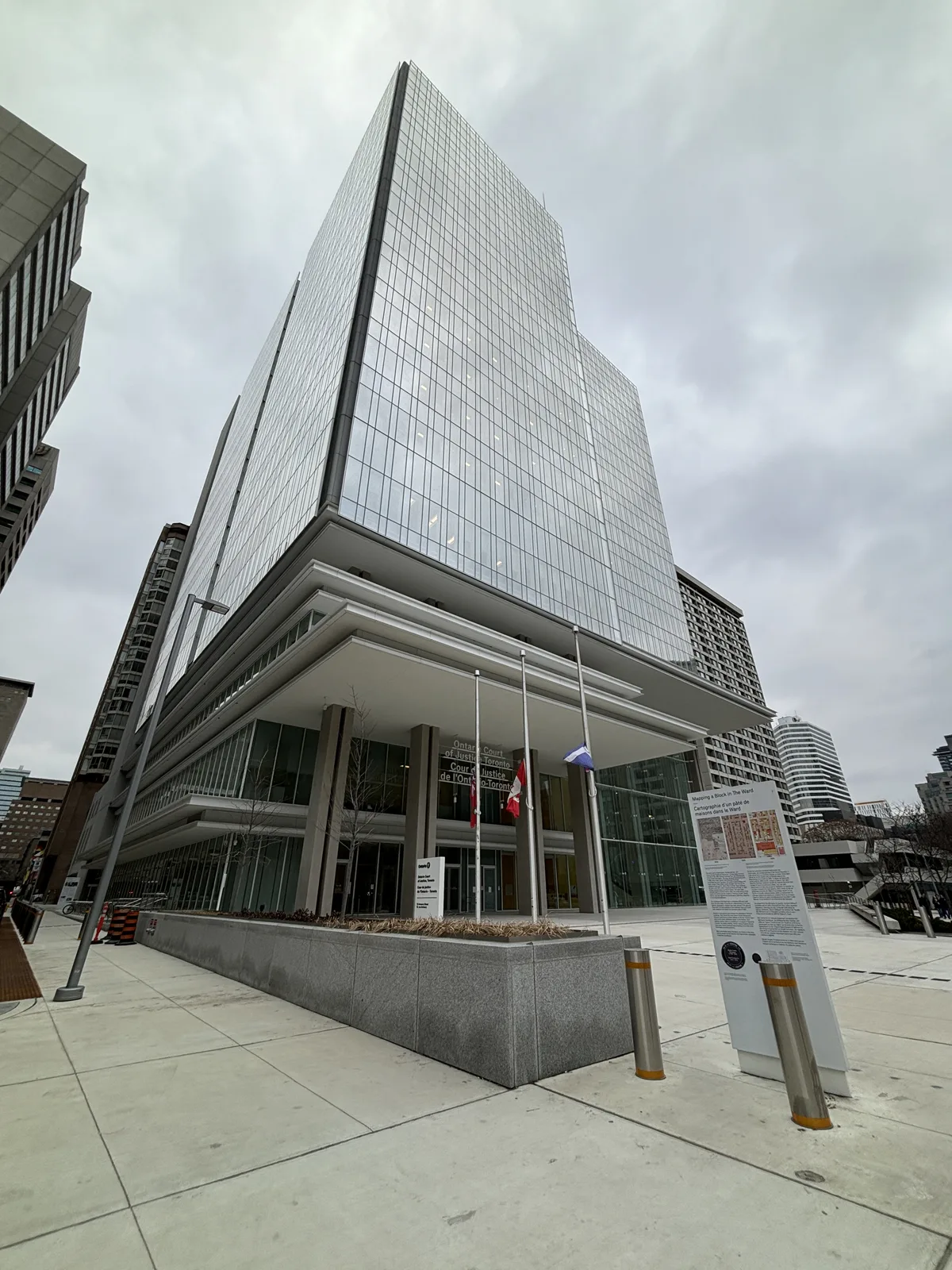
When a debt is too large for Small Claims Court, the process gets more formal. But the tools also get stronger, and so does your ability to recover the cost of collecting.
Above the $50,000 Small Claims Court ceiling, raised from $35,000 on October 1, 2025, a debt claim moves to the Superior Court of Justice, governed by the Rules of Civil Procedure. Business owners and lenders sometimes dread that transition, expecting a slower, more expensive fight. The process is more involved, that is true. But the Superior Court also offers a fast track for clear debts, and a costs regime that can return a meaningful share of your legal fees when you win.
Simplified Procedure: The Middle Track
Not every Superior Court action is a full-blown proceeding. Under Rule 76 of the Rules of Civil Procedure, claims of $200,000 or less must proceed by Simplified Procedure, a streamlined track built to keep mid-sized cases proportionate. Oral examinations for discovery are time-limited, the interlocutory steps are compressed, and trials are shorter and heard without a jury. For a debt sitting between the $50,000 Small Claims ceiling and $200,000, Simplified Procedure is the default, and it strips out much of the cost and delay people associate with the Superior Court. Knowing which track your claim falls into is the first strategic decision in the case, because it sets the budget and the timeline for everything that follows.
The Action Begins With a Statement of Claim
A Superior Court debt action starts with a Statement of Claim, which sets out the facts and the amount owed. The defendant is served and files a Statement of Defence. From there the case can move through documentary discovery and examinations for discovery, where each side answers questions under oath. For a genuinely disputed debt, this is where the facts get tested. For a clear debt, though, there is often a much faster route.
Summary Judgment: The Fast Track for Clear Debts
Many debts are not really in dispute. The money was owed, the invoice went unpaid, and the defence, if there is one, is thin. For those cases, Rule 20 of the Rules of Civil Procedure allows a motion for summary judgment, asking the court to decide the claim without a full trial because there is no genuine issue requiring one. Since the Supreme Court of Canada's decision in Hryniak v. Mauldin, courts have been encouraged to use summary judgment to resolve appropriate cases efficiently. For a straightforward debt, a summary judgment motion can produce a judgment in a fraction of the time and cost of a trial.
"Most commercial debts are not genuinely contested. They are simply unpaid. Summary judgment exists precisely so those cases do not have to wait years for a trial they do not need."
Recovering Your Legal Costs
The Superior Court follows a loser pays principle. A successful party is generally entitled to a costs award against the losing side, usually on a partial indemnity basis that recovers a portion of the actual legal fees, and sometimes more where the losing party acted unreasonably or refused a reasonable settlement offer. This changes the economics of pursuing a larger debt. You will not typically recover every dollar of fees, but a real contribution toward them is often available, which narrows the gap between the judgment and your net recovery. We explain that cost math in more detail in our article on what civil litigation really costs.
Interest Runs the Whole Time
A Superior Court judgment carries interest at both ends. Pre-judgment interest runs under the Courts of Justice Act from the date the debt came due, or at the contractual rate if your agreement sets one, and post-judgment interest continues until the debt is actually paid. For a substantial commercial debt, the interest that accrues over the life of a dispute is not a rounding error. It also reshapes the debtor's incentives: stalling does not shrink the obligation, it grows it, and that is often the most persuasive point you can make when pressing a reluctant debtor toward settlement.
Offers to Settle Have Teeth
Rule 49 of the Rules of Civil Procedure gives written offers to settle real consequences. If you make a formal offer and then do at least as well at trial, the court can award you costs on a higher scale from the date of the offer. A well timed, well judged offer is not just a negotiating tactic. It is a tool that shifts cost risk onto a defendant who unreasonably refuses to settle, and it often brings a resistant debtor to the table.
Protecting the Debt Before Judgment
Ontario generally does not let a creditor freeze a debtor's assets simply because a claim has been started. In exceptional cases, though, where there is strong evidence of a real risk that the debtor will dissipate or hide assets to defeat a future judgment, the court can grant a preservation order, known as a Mareva injunction. It is a high bar and a rare remedy, not a routine step. But for a large debt against a debtor who may move money out of reach, it is worth knowing the tool exists, because it can be the difference between a paper judgment and an actual recovery. The time to raise it is early, before the assets move.
Do Not Forget the Two Year Clock
The limitation period applies here just as it does in Small Claims Court. Under the Limitations Act, you generally have two years from when you knew or ought to have known of the claim. For a large commercial debt, waiting can be fatal to an otherwise strong case. Move while the claim is live.
Winning Is Not Collecting
A Superior Court judgment, like any judgment, still has to be enforced if the debtor will not pay. The enforcement tools, garnishment, writs of seizure and sale, and examinations in aid of execution, are covered in our article on enforcing a judgment in Ontario. A judgment is the goal, but collection is the finish line.
If you are owed a substantial debt and the debtor will not pay, our debt collection and civil litigation pages explain how I pursue recovery in the Superior Court, and the first consultation is free.