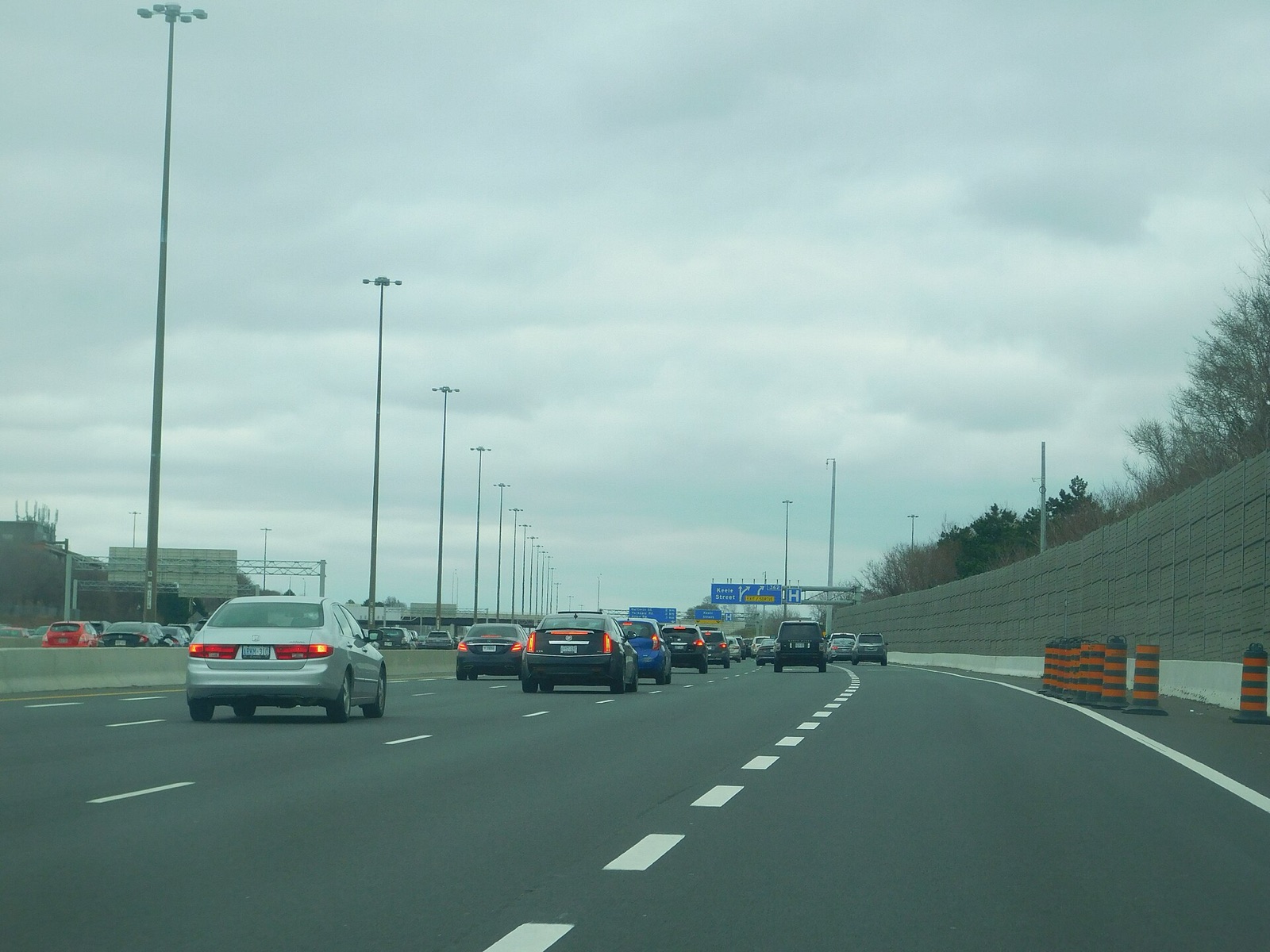
Fifty-two kilometres of new highway has to come from somewhere, and it is coming from about 500 properties between Halton and Vaughan.
Highway 413 runs from Highway 401 in Halton east to Highway 400 in Vaughan. Caledon hosts the longest stretch. The corridor is set to take in the order of 2,000 acres of farmland and roughly 400 acres of Greenbelt land in northern Vaughan. In its 2025 budget the Province put a number on it: approximately 500 properties to acquire.
The project has moved past the point where landowners can treat it as hypothetical. The corridor was designated under the Public Transportation and Highway Improvement Act on November 27, 2025, and the final Environmental Impact Assessment Report was published on March 12, 2026. If your land is on the alignment, the question is no longer whether, it is what you are paid and how much time you get.
The one restriction that makes this corridor different
Most Ontario expropriations run entirely on the Expropriations Act. Highway 413 does not, quite. Bill 212, the Reducing Gridlock, Saving You Time Act, 2024, added a restriction that applies to priority highway projects: a registered owner cannot apply under the Expropriations Act to adjust the date of possession for land the Minister expropriates for such a project.
Read that narrowly, because it is narrow. It does not reduce what you are owed. Market value, injurious affection, disturbance damages, business loss, interest, and the section 32 costs rule all still apply in full. What it removes is the usual mechanism for arguing that you need more time before you have to be off the land.
For a homeowner that is disruptive. For a farm it can be considerably worse, because agricultural operations run on a calendar that does not negotiate. A possession date that lands mid-season, before a crop can be taken off, is a real financial loss, and if you cannot move the date then the answer has to come through the compensation claim instead. That is a reason to have the claim properly built early rather than late.
Farmland is not just acreage
The most common mistake on a rural taking is to treat the claim as a price per acre. A corridor through the middle of a working farm does considerably more than remove land:
- Severance. Fields end up cut off from the buildings that serve them. Equipment that used to cross a headland now has to travel a public road, sometimes for kilometres, every pass.
- Drainage and tile. Systematic tile drainage does not respect a new property line. A corridor can interrupt a drainage system serving land well beyond the strip taken.
- Remnant shape. A triangular or awkwardly narrow remainder may be technically farmable and practically not worth farming at the scale the operation needs.
- Operating economics. Below a certain acreage, a given set of equipment and a given operation stop making sense. That threshold effect is real and it belongs in the claim.
Every one of those is injurious affection to the land you keep, and it is separate from and additional to the market value of the land taken. On corridor takings through farmland, injurious affection frequently exceeds the value of the strip itself. It is also the head an authority's appraisal is most likely to treat thinly.
There is no hearing of necessity on this corridor
Highway 413 land is being acquired under the Public Transportation and Highway Improvement Act, and the COVID-19 Economic Recovery Act, 2020 abolished hearings of necessity for expropriations under that Act. There is no 30-day window to challenge whether the taking should happen, and no inquiry to wait for. What the legislation contemplates instead is that the Minister may establish a process for receiving comments from affected owners, so the practical step is to find out what that process is for this corridor and get submissions into it.
The deadline that does apply, and that owners on this corridor should be watching, is the section 10 election. When the authority serves the Notice of Expropriation it also serves a Notice of Election, and you have 30 days to return it choosing whether your land is valued as at the registration of the expropriation plan or the service of the notice. Say nothing and the registration date is deemed. Along a corridor where the announcement itself has been moving land values for years, that choice can be worth a great deal, and unlike the hearing of necessity it applies to every taking here.
None of this touches your compensation. Market value, injurious affection, disturbance damages, business loss, interest and section 32 costs all apply in full. On a corridor taking through farmland, that is where essentially all of the value in your file sits.
Who pays for the appraisal
Landowners often assume that challenging the Province means funding a fight out of their own pocket. Section 32 of the Act says otherwise. Where the Ontario Land Tribunal awards you 85% or more of the amount the authority offered, the authority must pay your reasonable legal, appraisal, and other costs actually incurred in determining compensation.
You do not have to beat the offer outright, only come within 15% of it. One qualification: the Court of Appeal held in Shergar Development Inc. v. Windsor (City) that the amount offered is not limited to the section 25 offer, so a later settlement offer from the Province raises the bar, and below 85% of that costs fall to the Tribunal's discretion and can be ordered against you. Still, for most owners this is what makes an independent appraisal affordable rather than a gamble.
What to do now
- Note the exact date of service on any Notice. The 30-day section 10 election runs from it.
- Do not sign a purchase agreement or a release before it is reviewed. An agreement reached before the statutory process starts is a voluntary sale, and it can forgo protections, including the costs rule above, that only attach once the process begins.
- Start a file now: deed, survey, tile maps, drainage plans, crop and yield records, equipment inventory, and anything showing how the operation actually works across the whole holding.
- Take the section 25 payment when it comes. It is 100% of the market value the authority itself estimates, it is paid without prejudice, and accepting it settles nothing.
- Get advice while the corridor is still being assembled rather than after your neighbours have all settled. Early comparables set the tone for a whole stretch of a corridor.
More detail on the process is in what to do after an expropriation notice, and on the specific city pages for Caledon, Vaughan, Brampton, and Halton Hills.