Nobody takes your title. You just stop being able to use part of your own land, permanently.
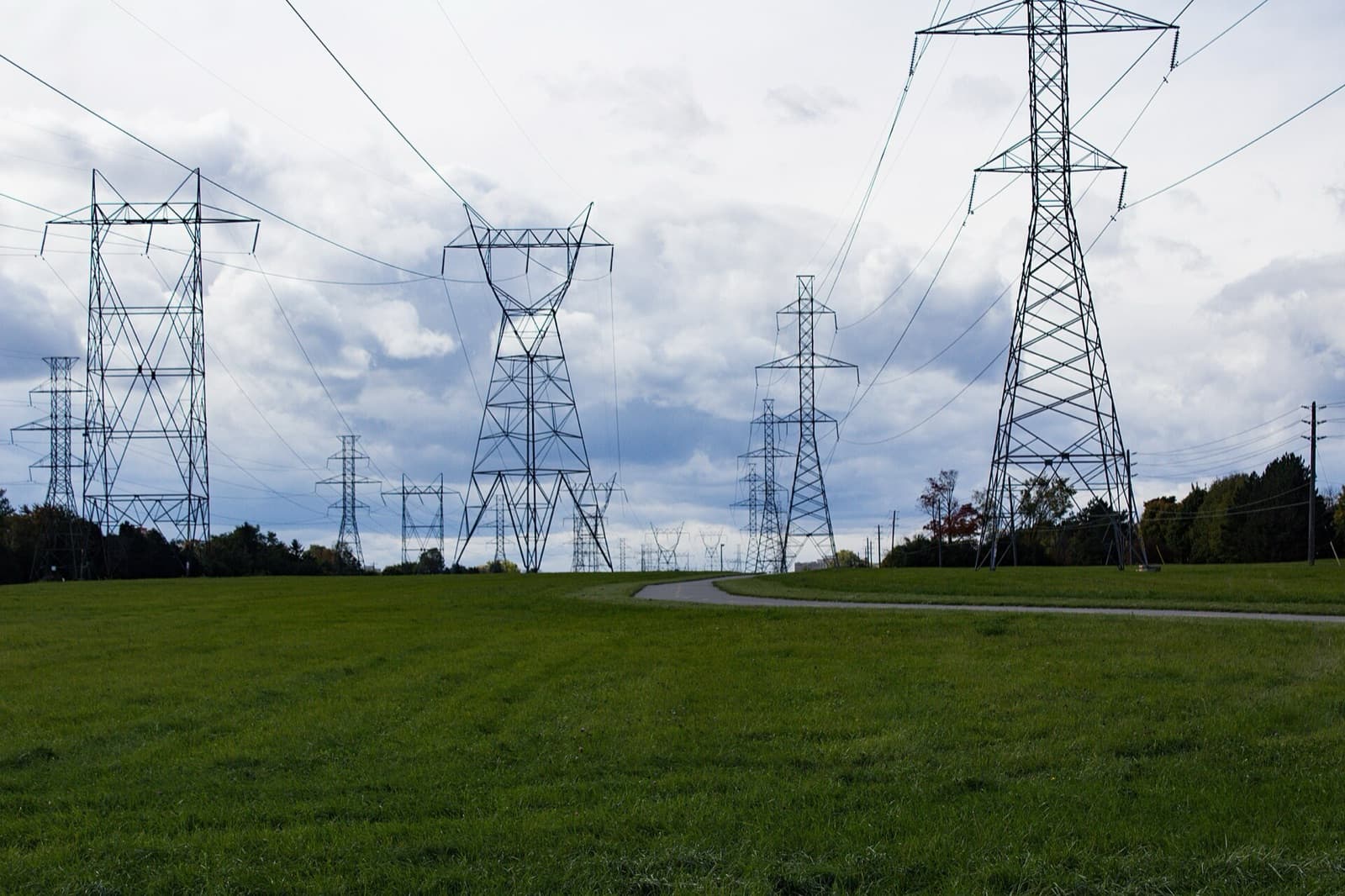
Transmission corridors, distribution lines, pipelines, and municipal servicing usually do not proceed by taking your property outright. They proceed by easement: a registered right over a strip of your land, held by the utility, for as long as the infrastructure is there.
Because you keep the deed, an easement feels like the small version of expropriation. Owners tend to treat the offer as compensation for a nuisance and settle quickly. That instinct is usually wrong, and on rural and development land it can be expensive.
What an easement actually costs you
The compensable loss is the restriction on use over the burdened strip, and it does not end when the crew leaves:
- You cannot build over it. On a property with development potential, an easement across the middle can dictate where a building can go, or whether the site works at all at the density it otherwise would.
- You often cannot plant over it. Deep-rooted crops, orchards, and woodlot are typically restricted within a transmission corridor.
- Drainage and tile across the strip may be restricted or need to be rerouted, affecting land well outside the easement.
- Access rights. The utility can enter to maintain the works, which means vehicles and equipment across your land on their schedule, not yours.
- Marketability. A registered easement is on title forever. Buyers price it, and the discount they apply is rarely limited to the strip itself.
The valuation mistake
The most common undervaluation treats an easement as a percentage of the market value of the burdened strip alone, as if the effect stopped at the easement boundary. Often it does not.
A corridor across the buildable portion of a development parcel can sterilise far more land than it covers, because what remains no longer configures into a viable plan. A corridor across a farm can interrupt drainage serving fields on both sides. In each case the loss to the remainder is injurious affection, a separate head of compensation from the value attributed to the easement itself, and it is regularly absent from a utility's offer.
Easements still run under the Act
Where a body with expropriation power acquires an easement compulsorily, the Expropriations Act applies. That means the machinery owners often assume is reserved for full takings is available here too:
- For a municipal or regional easement, a Notice of Application starts a 30-day window to request a hearing of necessity. Where the utility is instead authorised by the Ontario Energy Board, as Hydro One and gas pipelines generally are, there is no hearing of necessity at all: the Expropriations Act makes the OEB the approving authority, and the landowner's forum is intervening in the OEB proceeding itself, on a different test and a different costs regime. Find out which track you are on before assuming a deadline.
- Compensation covers the value of the interest taken, injurious affection to the remainder, disturbance damages, and interest at 6% per year under section 33.
- Under section 32, if the Ontario Land Tribunal awards you 85% or more of the amount offered, the authority pays your reasonable legal and appraisal costs, and you need not beat the offer outright. Per Shergar, later settlement offers count toward that threshold too, and below it costs are discretionary.
That last point matters more on easement files than anywhere else, because the sums in dispute are often modest enough that owners assume professional advice cannot be justified. Section 32 is the reason it usually can be.
Before you sign
Utilities frequently approach landowners with an easement agreement and a cheque before any statutory process begins. Signing at that stage is a voluntary grant, not an expropriation, and it can forgo the protections above, including the costs rule that would otherwise have funded your appraisal.
Read the width and the terms carefully, and pay attention to what the agreement permits beyond the obvious: access routes, vegetation clearing rights, the ability to add further infrastructure within the same corridor later, and whether the width can be expanded. An easement drafted broadly today constrains the land for decades.
Get it reviewed before signing. More on the process in what to do after an expropriation notice, and for rural Ontario in particular see the Caledon, Milton, and Halton Hills pages.